
Kèo châu Âu là một trong những loại kèo được sử dụng phổ biến nhất trong các trận đấu bóng đá. Tuy nhiên, để đọc kèo châu Âu một cách chính xác và hiệu quả, người chơi cần phải hiểu rõ các khái niệm và cách tính toán. Trong bài viết này của Fi88, chúng ta hãy cùng thảo luận và tìm hiểu cách đọc kèo châu Âu chuẩn xác nhé.
Định nghĩa Kèo châu Âu

Kèo châu Âu còn được gọi là kèo 1×2. Đây là loại cược mà bạn có thể dễ dàng bắt gặp trên các trang cá cược thể thao. Kèo châu Âu được đánh giá là dễ chơi, dễ hiểu, dễ đặt cược và dễ thắng. Bạn không cần phải suy nghĩ quá nhiều về các tỷ lệ kèo cược như kèo Châu Á, hay cách tính bàn thắng như Tài và Xỉu. Thay vào đó, bạn chỉ cần chọn một trong ba tùy chọn.
Đối với kèo châu Âu, nhà cái sẽ đưa ra 3 tỷ lệ cược, tương ứng với 3 kết quả trận đấu là:
- 1: chủ nhà thắng
- 2: đội khách thắng
- x: 2 đội hòa nhau
Bạn cần chọn 1 trong 3 tỷ lệ cược để đặt cược. Cách diễn giải tỷ lệ kèo châu Âu rất đơn giản. Bạn không phải lo lắng về điểm số. Thay vào đó, bạn chỉ cần quan tâm đến kết quả trận đấu sau 90 phút thi đấu chính thức.
Kèo châu Âu cũng có 2 dạng như các kèo cược cược khác là cược kèo châu Âu FT (hiệp 1) và kèo châu Âu FT (full time). Kèo châu Âu phù hợp với người mới bắt đầu học chơi cá cược thể thao trực tuyến vì cách chơi đơn giản, anh em sẽ có thể nhanh chóng nắm bắt, hiểu và áp dụng chơi 1 cách dễ dàng.
Hướng dẫn đọc kèo Châu Âu chi tiết

Như đã nói ở trên, kèo châu Âu sẽ bao gồm 3 kèo cược cho người chơi lựa chọn, tương ứng với kết quả thắng, hòa và thua của đội chủ nhà. Tuy nhiên, để hiểu cách đọc kèo châu Âu, chúng ta cần hiểu về ký hiệu và cách thể hiện của loại kèo này trên bảng tỷ lệ cược.
Cách đọc kèo châu Âu
Trên bảng tính cược tại sảnh thể thao Fi88, kèo châu Âu được ký hiệu là kèo 1×2. Đội chủ nhà (home) sẽ nằm bên phải tương đương 1 trong 1×2, đội khách (away) sẽ nằm bên trái tương đương số 2 trong 1×2. Và ở giữa là hòa sẽ được ký hiệu là x.
Bạn chọn mức cược nào sẽ tương ứng với số tiền bạn nhận được nếu thắng. Chia làm 3 trường hợp, người chơi sẽ có cơ hội chiến thắng lên đến 33,33%. Đây là một tỷ lệ tương đối thấp đối với một người mới chơi cờ bạc. Vì vậy, để cá cược hiệu quả, bạn cần biết cách diễn giải tỷ lệ kèo châu Âu cho từng giải đấu, từng trận đấu để gia tăng tỷ lệ chiến thắng cho bản thân.
Cách xác định đội cửa trên trong kèo châu Âu cũng cực kỳ đơn giản. Đội nào có tỷ lệ trả thưởng thấp hơn thì sẽ là đội cửa trên. Bởi vì không căn cứ vào số bàn thắng được ghi mà chỉ phục thuộc vào kết quả nên đội mạnh hơn dành chiến thắng thì tỷ lệ thưởng sẽ thấp hơn vì không chấp như kèo châu Á. Thông thường tỷ lệ trả thưởng sẽ được sắp xếp theo độ chênh lệch trình độ của 2 đội theo thứ tự: Đội cửa dưới sẽ có tỷ lệ trả thưởng cao nhất > Hòa > Đội cửa trên sẽ có tỷ lệ trả thưởng thấp nhất.
Trường hợp nếu 2 đội có thực lực tương đương thì 3 tỷ lệ cược này sẽ gần bằng nhau. Chỉ chênh lệch 1 chút vì nhà cái sẽ đánh giá theo tương quan lực lượng, sân nhà sân khách và các yếu tố liên quan khác.
Ví dụ về kèo châu Âu
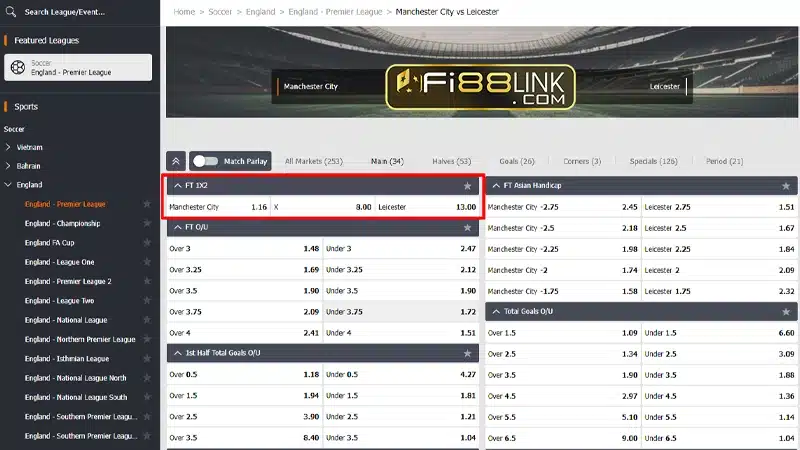
Nhìn vào bảng tỷ lệ cược, không khó để nhận thấy tỷ lệ kèo châu Âu của Manchester City cả trận trước Leicester là 1.16*8.00*13.00. Trong đó, Manchester City là đội chủ nhà, Leicester là đội khách, Mancity là đội mạnh hơn nên sẽ là kèo trên với tỷ lệ ăn thưởng chỉ là 1.16. Ngược lại, Leicester được đánh giá thấp hơn rất nhiều với tỷ lệ ăn thưởng lên đến 13.00. Khả năng 2 đội hòa nhau cũng được nhà cái đánh giá không cao. Nhận biết qua tỷ lệ trả thưởng lên đến 8.00.
Tỷ lệ kèo châu Âu tương ứng với kết quả đội chủ nhà Manchester City thắng, hòa và đội khách Leicester thắng như sau:
Nếu Manchester City thắng, người chơi sẽ nhận được 1,16 lần tiền cược ban đầu.
Nếu Manchester City hòa với Leicester, người chơi sẽ nhận được 8,00 lần tiền cược ban đầu.
Nếu Leicester thắng, người chơi sẽ nhận được 13,00 lần tiền cược ban đầu.
Có thể thấy luật chơi và cách đọc kèo châu Âu rất đơn giản. Tuy nhiên, để đưa ra lựa chọn hợp lý, bạn cần nắm rõ đội hình, nắm rõ tình hình thi đấu của hai đội, lịch sử đối đầu giữa đôi bên. Khi hiểu rõ về cả 2 đội cũng như cách soi kèo châu Âu chắc chắn bạn sẽ có được lựa chọn chính xác nhất.
Kinh nghiệm đọc kèo châu Âu
Cách đọc kèo châu Âu là cần thiết nếu muốn chiến thắng trong trong kèo cược này, nhưng đó không phải là tất cả. Kinh nghiệm cược cũng cực kỳ quan trọng, anh em cần phải nắm rõ 1 số mẹo cược, 1 vài lưu ý cần thiết cho anh em để có thể chiến thắng trong kèo cược thú vị này.
Trong nhiều trận đấu, bạn có thể dễ dàng nhận thấy sự khác biệt giữa thắng và thua của đội chủ nhà. Đây là một trong những cái “bẫy” của nhà cái. Thấy tỷ lệ cá cược cao và khả năng kiếm được nhiều tiền, nhiều người thường đặt cược với mong muốn thắng lớn.
Tuy nhiên, để giành chiến thắng trong một trận đấu với tỷ lệ cược như vậy là điều không hề dễ dàng. Thậm chí một trận hòa cũng khó xảy ra. Trước khi đặt cược vào những trò chơi như vậy, bạn cần phải suy nghĩ cẩn thận.
Khi tìm hiểu soi kèo châu Âu chúng ta cũng không thể bỏ qua thời gian đặt cược. Đặt cược đúng thời điểm sẽ giúp anh em đưa ra những lựa chọn chính xác nhất. Thông thường, anh em nên đặt cược sớm từ 3-5 ngày trước khi trận đấu bắt đầu.
Đây được coi là thời điểm đặt cược và đặt cược chính xác. Lúc này tỷ lệ cược thường chính xác và không dao động quá nhiều. Một ngày trước khi trận đấu bắt đầu, nhà cái có thể liên tục điều chỉnh mức cược khiến người chơi hoang mang. Không nên đặt cược vào thời điểm này kẻo nhận định sai lầm.
Khi nhắc đến cá cược Châu Âu chắc chắn chúng ta không thể bỏ qua những thông tin, tình hình của hai đội. Chỉ khi hiểu rõ về hai đội, bạn mới có thể đưa ra lựa chọn đúng đắn, nhất là trong những trận mà tỷ lệ cược không chênh lệch nhiều.
Trước tiên chúng ta hãy cùng nhau tìm hiểu về phong độ thi đấu cũng như thực lực của đôi bên, tính chất trận đấu và thành tích đối đầu. Trên thực tế, bản chất của trận đấu là tương quan lực lượng 2 đội là một yếu tố quan trọng mà nhiều người thường bỏ qua.
Các trận đấu có tính chất quan trọng, quyết định đến chức vô địch hay các trận đấu loại trực tiếp (play-off) sẽ có tính chất khác với các trận giao hữu, các trận không còn nhiều ý nghĩa cho kết quả cuối mùa. Vì vậy hãy quan sát và đánh giá 1 cách thật cẩn thận để tránh đưa ra những quyết định sai lầm nhé.
Ngoài các yếu tố như đã nêu ở trên, anh em cũng không nên bỏ qua các nhận định từ các chuyên gia cá cược thể thao. Họ là những người dành nhiều thời gian để phân tích, quan sát tình hình của các đội bóng trước, trong và sau các trận đấu. Đúc rút được nhiều kinh nghiệm từ trải nghiệm thực tế. Với nhiều năm kinh nghiệm soi kèo cá cược thể thao, các chuyên gia tại Fi88 sẽ đưa ra những nhận định, phân tích các yếu tố 1 cách chính xác. Chắc chắn đây là 1 nguồn đáng tin cậy để anh em thao khảo.
Kèo châu Âu hiệp 1 (kèo HT) cũng là lựa chọn không tồi nếu anh em hiểu rõ trận đấu. Nhiều trận đấu có tương quan lực lượng chênh lệch lớn, kèo trên thường có xu hướng kết thúc trận đấu trong hiệp 1 với chiến thắng áp đảo. Nhưng có những trận đấu mà 2 đội dằng co, thăm dò lẫn nhau trong nửa đầu trận đấu. Vì vậy nếu hiểu rõ tính chất của trận đấu thì anh em hoàn toàn có thể chiến thắng với kèo châu Âu HT.
Nếu muốn hiểu rõ hơn về cách đọc kèo châu Âu, bạn có thể tìm kiếm trên mạng về kèo châu Âu cũng như cách đọc và ví dụ chi tiết nhất về kèo châu Âu. Biết nhiều hơn sẽ giúp bạn đưa ra nhận định chính xác nhất.
Kết luận
Mong rằng qua bài viết trên các bạn đã hiểu sâu hơn về cách đọc kèo châu Âi. Kèo châu Âu không khó chơi. Với một chút nghiên cứu, một chút phân tích, bạn có thể đưa ra lựa chọn đúng đắn cho mình. Chúc các bạn thành công và có những giây phút cá cược, chơi cá cược thư giãn nhất.
